Shove’s Triad is a model from social practice theory that explains everyday activities — driving, cooking, cycling, showering — as the ongoing integration of three elements: materials, competences and meanings. Developed by Elizabeth Shove, Mika Pantzar and Matthew Watson in The Dynamics of Social Practice (2012), it shifts the unit of analysis away from the individual’s attitudes and choices toward the practice itself. A practice exists only while people actively perform it, re-linking its elements each time.
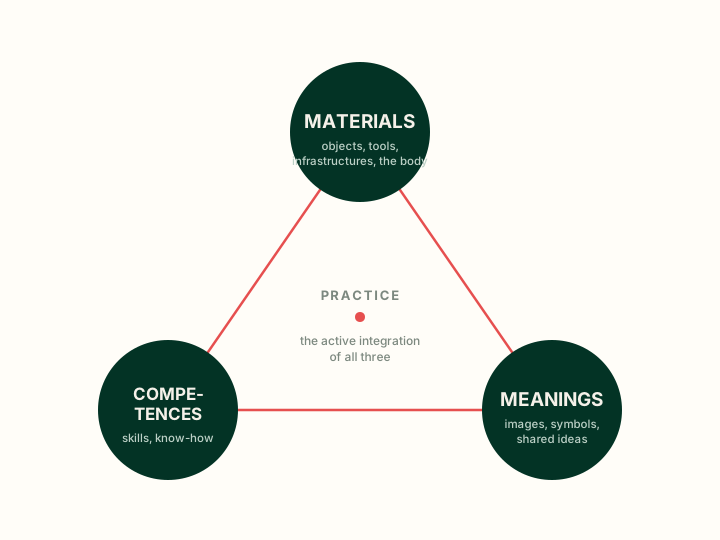 Redrawn for Deep Garden — after Shove, Pantzar & Watson (2012). Original at researchgate.net ↗
Materials
Objects, infrastructures, tools, technologies and the body itself — the tangible stuff a practice requires.
Competences
Know-how, background understanding and deliberately cultivated skill needed to perform the practice.
Meanings
The social and symbolic significance of taking part: ideas, aspirations and shared understandings of why it matters.
Practices “emerge, persist, shift and disappear when connections between elements of these three types are made, sustained or broken.” Because a practice is a bundle of links rather than a personal decision, change rarely follows from persuasion alone. Interventions must reconfigure materials, competences and meanings together — a systemic view of behaviour change that resonates with narrative and cultural strategy.
Also see Habitus, Affordances and Enculturated Cognition